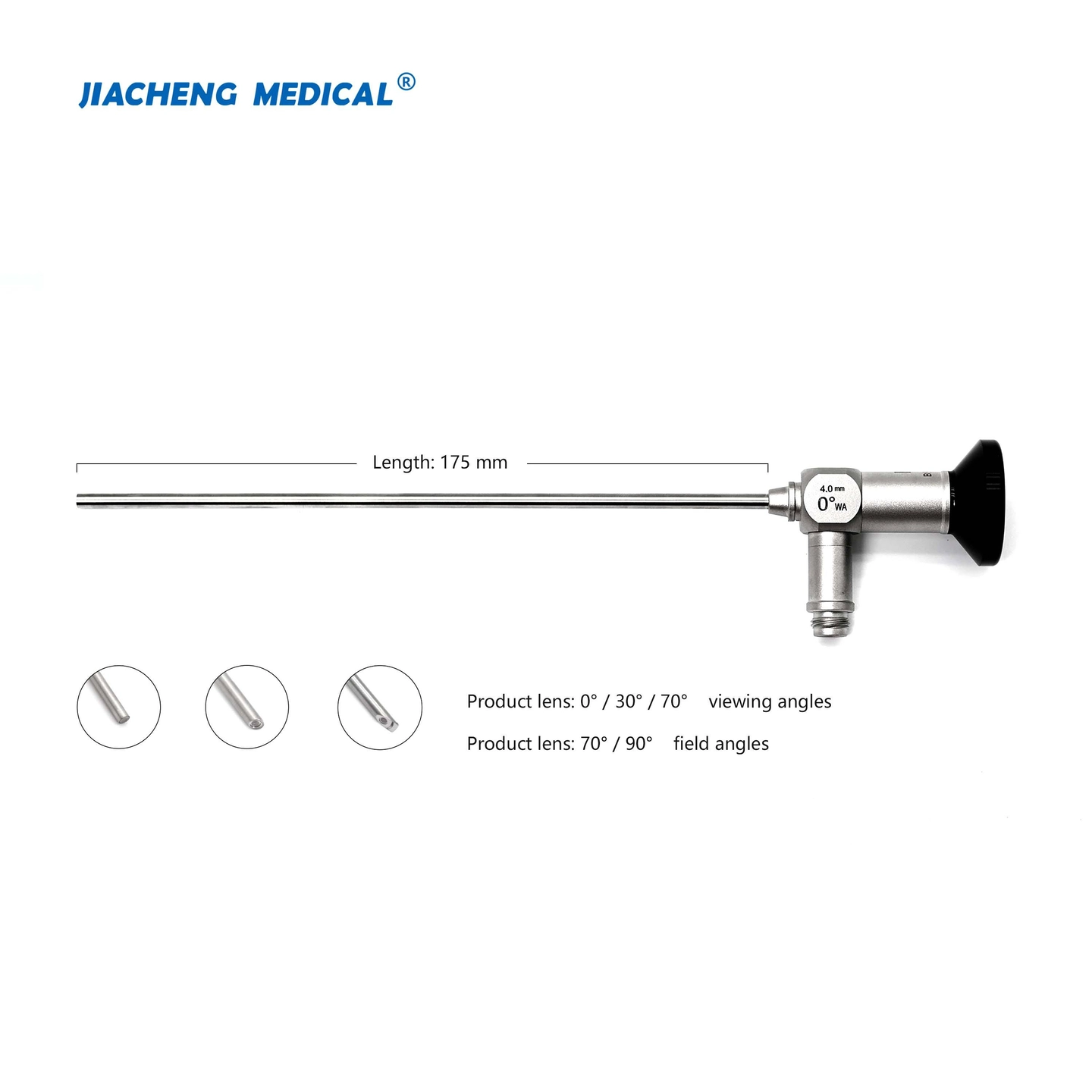


What Is an Endoscope?
An endoscope is a precision medical device designed to observe internal cavities or soft tissues of the human body without open surgery. It gives clinicians a direct, real-time window into the body - enabling both accurate diagnosis and targeted treatment through a single, minimally invasive instrument.
Used across gastroenterology, pulmonology, urology, gynecology, orthopedics, and ENT medicine, endoscopes have become one of the most versatile and widely used tools in modern clinical practice. Understanding their basic characteristics and structural components helps patients, healthcare professionals, and procurement specialists make informed decisions about endoscopic technology.
Core Characteristics of Endoscopes
1. Direct Visualization of Internal Structures
The defining characteristic of an endoscope is its ability to provide direct, real-time visualization of internal cavities and soft tissues. Unlike external imaging modalities such as CT scans or MRI - which produce reconstructed representations of internal anatomy - an endoscope transmits live optical images directly from inside the body.
Key visual capabilities include:
- High-definition image clarity for precise tissue assessment
- Adjustable viewing angles and depth of field
- Real-time observation without radiation exposure
- Ability to detect subtle mucosal changes invisible to external imaging
This direct visualization capability is what makes endoscopy the gold standard for diagnosing gastrointestinal, respiratory, and urological conditions where surface-level tissue assessment is critical.
2. Minimally Invasive Design
Endoscopes are engineered to access internal body cavities through natural orifices or small incisions, minimizing trauma to surrounding tissue. This minimally invasive approach delivers significant clinical advantages compared to open surgical methods:
| Clinical Factor | Endoscopic Approach | Open Surgery |
|---|---|---|
| Tissue trauma | Minimal | Extensive |
| Patient discomfort | Low | High |
| Recovery time | Days to 1–2 weeks | Weeks to months |
| Risk of complications | Low | Higher |
| Hospital stay | Same-day or short | Extended |
For patients, this translates to faster recovery, less postoperative pain, reduced infection risk, and a quicker return to normal activities - making endoscopy the preferred approach wherever clinically appropriate.
3. Multifunctionality: Diagnosis, Treatment, and Adjuvant Therapy
A key strength of modern endoscopes is their ability to serve multiple clinical functions within a single procedure:
- Examination: Direct visual inspection of mucosal surfaces, tissue abnormalities, lesions, or bleeding sources
- Treatment: Therapeutic interventions including polyp removal, hemostasis, stent placement, stone extraction, and tumor ablation
- Adjuvant therapy: Delivery of targeted drug treatments, photodynamic therapy, or injection therapy directly to affected tissue sites
This multifunctionality eliminates the need for separate diagnostic and surgical sessions, reducing procedural burden for patients and improving overall clinical efficiency.
Structural Components of an Endoscope
An endoscope is a sophisticated instrument comprising five integrated systems, each with a distinct and essential function:
The Body
The body of an endoscope is a rigid or flexible tubular structure that houses and connects all internal systems. It serves as the primary interface between the clinician and the patient, providing the structural framework through which the optical, light source, and transmission systems operate. The body is designed to be durable, biocompatible, and - in the case of flexible endoscopes - capable of navigating the natural curvatures of the gastrointestinal or respiratory tract.
The Optical System
The optical system is the image-capturing core of the endoscope. It transmits high-fidelity visual information from inside the body cavity to an external observer or monitor. Modern optical systems use:
- Charge-coupled device (CCD) or CMOS sensors for digital image capture
- Fiber-optic bundles in traditional endoscopes for analog image transmission
- Lens arrays optimized for wide-angle viewing and close-up magnification
The quality of the optical system directly determines the diagnostic capability of the endoscope - higher resolution imaging enables detection of smaller lesions and more subtle tissue pathology.
The Light Source System
Clear visualization inside the body requires adequate illumination. The light source system provides bright, consistent lighting for the optical system, typically delivered via:
- LED light sources - energy-efficient, long-lasting, with excellent color rendering
- Xenon arc lamps - high-intensity white light for detailed tissue examination
- Fiber-optic light guides - transmitting light from an external source along the endoscope shaft
The light source system must balance sufficient brightness for clear imaging with safety for delicate internal tissues, avoiding thermal damage during extended procedures.
The Transmission System
The transmission system acts as the communication backbone of the endoscope, carrying signals generated by the optical and operating systems to the observer or monitor. This includes:
- Video signal transmission from the image sensor to the external display
- Data transmission for digital recording, measurement, and documentation
- Signal integrity management to maintain image quality across the full length of the endoscope
In modern digital endoscopy systems, the transmission system supports HD and 4K video output, AI-assisted image analysis integration, and real-time documentation for clinical records.
The Operating System
The operating system gives clinicians precise control over the endoscope's movement and instrument deployment. Key functions include:
- Angulation controls for tip deflection (up/down, left/right)
- Working channel management for passing biopsy forceps, snares, or other instruments
- Suction and insufflation controls for cavity management
- Integration with external processor units and imaging systems
The ergonomics and responsiveness of the operating system directly affect procedural precision, clinician comfort, and the overall safety of the endoscopic examination or intervention.
Types of Endoscopes and Their Applications
Different endoscope designs are optimized for specific clinical applications:
|
Endoscope Type |
Primary Application |
Key Feature |
|---|---|---|
|
Gastroscope |
Upper GI examination |
Flexible, forward-viewing |
|
Colonoscope |
Colorectal examination |
Long, flexible shaft |
|
Bronchoscope |
Airway and lung assessment |
Ultra-thin, flexible or rigid |
|
Cystoscope |
Bladder and urinary tract |
Rigid or flexible |
|
Laparoscope |
Abdominal surgery |
Rigid, camera-equipped |
|
Arthroscope |
Joint examination and surgery |
Rigid, small diameter |
|
Hysteroscope |
Uterine cavity assessment |
Flexible or rigid |
Frequently Asked Questions About Endoscopes
- What is the difference between a rigid and flexible endoscope? Rigid endoscopes are used in surgeries where the access path is straight (e.g., laparoscopy, arthroscopy). Flexible endoscopes navigate curved anatomical pathways such as the gastrointestinal or respiratory tract, making them suitable for diagnostic examinations like gastroscopy and colonoscopy.
- Are endoscopes reusable or single-use? Traditional endoscopes are reusable and require rigorous reprocessing between patients. Single-use (disposable) endoscopes are an increasingly adopted alternative, eliminating cross-infection risk and ensuring consistent performance from every procedure.
- How is image quality in endoscopes improving? Modern endoscopy systems now offer HD (1080p) and 4K imaging, narrow-band imaging (NBI) for enhanced mucosal contrast, and AI-assisted detection algorithms that flag suspicious lesions in real time - significantly advancing diagnostic accuracy.
- What maintenance do endoscopes require? Reusable endoscopes require thorough cleaning, high-level disinfection or sterilization, leak testing, and regular inspection of optical and mechanical components after every use, following international guidelines such as those from ESGE and ASGE.
Conclusion: The Endoscope as a Foundation of Modern Medicine
The endoscope - with its capacity for direct visualization, minimally invasive access, and multifunctional clinical application - represents one of the most important technological foundations of modern medicine. Its five integrated systems work in concert to deliver real-time diagnostic and therapeutic capability that no other single tool can match.
As endoscopic technology continues to evolve - with advances in single-use flexible scopes, AI-enhanced imaging, robotic-assisted systems, and ultra-high-definition optics - the endoscope's role as an essential clinical instrument will only expand.
Interested in high-performance endoscopic instruments and single-use endoscopy solutions? [Contact us]