


High-Resolution Flexible Fiber Endoscopes (Fibrescopes)
Jiacheng Medical has been making flexible fiber endoscopes for over a decade. We use high-density imported fiber bundles — the kind that actually hold up under daily clinical use — and the insertion tubes are soft enough to navigate tight anatomy without fighting back.
Our lineup covers ENT, respiratory, urology, and biliary work. Outer diameters run from 2.8mm up to 6.0mm, and we can adjust those numbers if your application needs something in between. OEM and ODM are standard here; about 60% of what we ship carries a customer’s own brand.
If you’re a hospital buying direct or a distributor building your product line, we can work with both. Factory pricing, no middleman markup.

-
![Flexible Choledochoscope]() Flexible CholedochoscopeThe flexible choledochoscope is a flexible fiber-optic endoscope, often used for minimally invasive prognosis and remedy of the biliary system.view more
Flexible CholedochoscopeThe flexible choledochoscope is a flexible fiber-optic endoscope, often used for minimally invasive prognosis and remedy of the biliary system.view more -
![Flexible Nasopharyngolaryngoscope]() Flexible NasopharyngolaryngoscopeThe flexible nasopharyngolaryngoscope is a particularly bendy fiber-optic endoscope, a frequently used narrow and bendy tubular endoscope in otorhinolaryngology, mainly designed for minimally invasive analysis and remedy in ENT.view more
Flexible NasopharyngolaryngoscopeThe flexible nasopharyngolaryngoscope is a particularly bendy fiber-optic endoscope, a frequently used narrow and bendy tubular endoscope in otorhinolaryngology, mainly designed for minimally invasive analysis and remedy in ENT.view more -
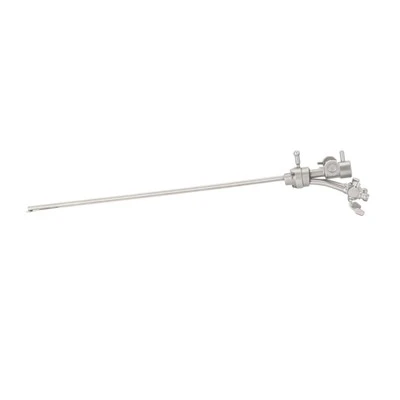
![Ureterorenoscope]() UreterorenoscopeThe ureterorenoscope is a core minimally invasive diagnostic and therapeutic system in urological scientific practice. Featuring a inflexible shaft design, it accesses the ureter without delay via the herbal passages of the urethra and...view more
UreterorenoscopeThe ureterorenoscope is a core minimally invasive diagnostic and therapeutic system in urological scientific practice. Featuring a inflexible shaft design, it accesses the ureter without delay via the herbal passages of the urethra and...view more -
![Li Xun Scope]() Li Xun ScopeThe Li Xun Scope is a inflexible endoscope especially designed for mini-percutaneous nephrolithotomy, belonging to the class of minimally invasive nephroscopes.view more
Li Xun ScopeThe Li Xun Scope is a inflexible endoscope especially designed for mini-percutaneous nephrolithotomy, belonging to the class of minimally invasive nephroscopes.view more -
![Transcystoscope]() TranscystoscopeTranscystoscope is an endoscopic machine designed for particular medical prognosis and treatment. It is basically used for minimally invasive examination and adjuvant remedy of associated cavities.view more
TranscystoscopeTranscystoscope is an endoscopic machine designed for particular medical prognosis and treatment. It is basically used for minimally invasive examination and adjuvant remedy of associated cavities.view more -
![Single Use Flexible Cystoscope]() Single Use Flexible CystoscopeFiber cystoscope is a surgical instrument used in urology for the examination and minimally invasive remedy of the bladder and urethra. Its benefit is that the scope is slim, which reasons much less trauma to patients, and can without a...view more
Single Use Flexible CystoscopeFiber cystoscope is a surgical instrument used in urology for the examination and minimally invasive remedy of the bladder and urethra. Its benefit is that the scope is slim, which reasons much less trauma to patients, and can without a...view more -
![Adult Flexible Bronchoscope]() Adult Flexible BronchoscopeThis Adult Flexible Bronchoscope is a bendy endoscope broadly used in respiratory medicine, ICU, anesthesiology and thoracic surgery, particularly designed for inspecting the trachea and bronchi. It is lightweight, bendy to operate, and...view more
Adult Flexible BronchoscopeThis Adult Flexible Bronchoscope is a bendy endoscope broadly used in respiratory medicine, ICU, anesthesiology and thoracic surgery, particularly designed for inspecting the trachea and bronchi. It is lightweight, bendy to operate, and...view more -
![Flexible Nephroscope]() Flexible NephroscopeA flexible nephroscope is a narrow and bendy scientific endoscope. It makes use of optical fiber transmission technological know-how to get entry to the renal pelvis and calyces via the herbal passages of the human urethra, bladder, and...view more
Flexible NephroscopeA flexible nephroscope is a narrow and bendy scientific endoscope. It makes use of optical fiber transmission technological know-how to get entry to the renal pelvis and calyces via the herbal passages of the human urethra, bladder, and...view more


Primary Products


Where Our Fibrescopes Get Used
ENT Outpatient Clinics
The nasopharyngolaryngoscope is probably the most common tool in an ENT clinic. Patient sits in a chair, scope goes in through the nose, doctor looks at the screen, done in five minutes. No general anesthesia, no prep. Our 2.8mm version is thin enough that most adults don’t need nasal decongestant spray.
Difficult Airway & ICU
Anesthesiologists use the bronchoscope when intubation isn’t straightforward — limited mouth opening, cervical spine issues, or just a difficult anatomy. The scope goes in first, the tube slides over it. In the ICU, nurses and respiratory therapists use it for bedside suctioning.
Respiratory Screening
Lung cancer screening, infection sampling, atelectasis workups. The bronchoscope reaches segmental bronchi for BAL (bronchoalveolar lavage) — you wash the area, collect the fluid, send it for culture. For foreign body removal, the working channel fits standard retrieval forceps.
Urology — Stones & Screening
Cystoscopy for bladder tumor surveillance and hematuria investigation. Ureterorenoscopy for upper tract stones — laser the stone, basket the fragments, or suction them out. The flexible nephroscope handles the calyceal corners where rigid scopes stop.
Pediatrics
Kids are not small adults — their airways and urethras are narrower and more reactive. A 2.8mm bronchoscope or cystoscope makes the difference between a cooperative child and a crying one. The tip is soft and rounded, and the shaft bends without springing back.
Postoperative Biliary Work
After cholecystectomy with T-tube placement, residual stones in the common bile duct are a known problem. Instead of a second open surgery, the flexible choledochoscope goes in through the T-tube tract, finds the stone, and the surgeon removes it with a basket.
What Sets These Scopes Apart
Fiber Bundle Quality
We import the optical glass fiber from a supplier we’ve worked with since 2012. Pixel count runs 10,000 to 18,000 depending on the model — enough to see mucosal detail, vascular patterns, and small lesions. The fibers are packed tight, so you don’t get the “honeycomb” grid effect that cheaper bundles show.
Bending That Actually Works
160° up, 130° down on most models. The angulation wires are stainless steel, not the thin alloy stuff that snaps after six months. We’ve tested our bronchoscope through 5,000 bending cycles and the angle held within spec. That’s roughly three years of daily use.
Waterproofing You Can Trust
Every scope is pressure-tested before it leaves the factory. Full immersion in disinfectant, autoclave cycles, ETO — it handles all of them. The seal is at the control body and at the distal tip housing. If water gets in, the fiber bundle clouds up and the image is ruined. We check every unit so that doesn’t happen.
Custom Diameters
2.8mm to 6.0mm is our standard spread, but we’ve made 2.2mm prototypes for research labs and 7.2mm units for veterinary use. If your spec falls outside the catalog, send it over. Our engineering team will tell you if it’s feasible and what the tooling cost looks like.
Handle Design
The control body is shaped so your thumb rests on the angulation knob naturally. The suction port and instrument channel inlet are positioned so you don’t have to twist your wrist to reach them. It’s a small thing, but when you’re doing ten cystoscopies in a morning, it matters.
Light Source Compatibility
Storz-type light guide post is standard. If your setup uses Wolf or Olympus, we have adapters. Or we can machine a custom light post if you’re ordering enough units to justify the tooling.
Certifications & Quality Control
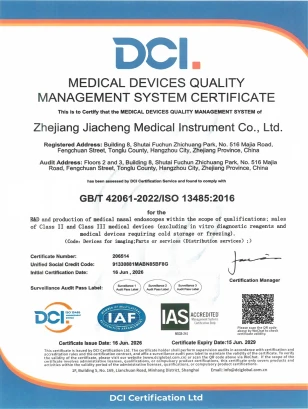
We don’t just check boxes. Every scope gets a 15-point inspection before packing: light transmission test, bending angle measurement, leak test, image resolution check, and a visual inspection of the distal lens for scratches. Defective units are pulled and reworked — they don’t get repackaged and shipped.
For bulk buyers, we include batch inspection reports with the shipment. If you need additional certificates for your country’s import registration, tell us early. Some documents take two to three weeks to prepare.
Buying Fibrescopes Direct from the Manufacturer: A Practical Guide
Fibrescope or Video Endoscope?
Buyers ask us this all the time. Here’s the honest breakdown.
A fibrescope uses glass fibers to carry the image from the tip to your eye or camera. No electronics in the shaft. That means it’s lighter, cheaper, and when something breaks, you usually only replace the fiber bundle — not the whole scope.
A video endoscope has a tiny camera chip at the tip. Better image, yes. But if that chip fails, you’re looking at a repair bill that’s often half the price of a new scope. And the unit itself is heavier and more fragile.
For routine diagnostic work — ENT exams, ICU suctioning, standard cystoscopy — a fibrescope does the job at a fraction of the cost. We’ve had customers run fibrescopes for five years with normal maintenance. Video scopes? Two to three years before major repairs start showing up.
Go video if you need NBI (narrow-band imaging), HD recording, or magnified views for research. Otherwise, a good fibrescope is the smarter buy.

Why Deal Direct with the Factory?
Spec Sheet Checklist
Before you request a quote, have these numbers ready. It saves time on both sides.
Frequently Asked Questions
A: Fibrescope = glass fibers carry the image. Video endoscope = electronic sensor at the tip. Fibrescopes are lighter, cheaper, and easier to repair. Video scopes have better image quality but cost more and break more expensively. For routine diagnostics, fibrescopes are usually the better value.
A: Usually yes. We’ve made 2.2mm research prototypes and 7.2mm veterinary scopes. Send us your target spec and we’ll tell you if it’s doable and what the minimum order looks like.
A: Standard is Storz-type. If you have Wolf, Olympus, or something else, we have adapters. Send a photo of your light source connector if you’re not sure.
A: All our fibrescopes are fully waterproof. Autoclave, ETO, or liquid chemical disinfection — all work. Check the manual for temperature and time specs. One thing: don’t use ultrasonic cleaners. The vibration can loosen the fiber bundle over time.
A: Yes, routinely. Logo on the handle, custom packaging, instruction manuals in your language — all standard. For some markets we can also help with registration dossiers. Talk to our sales team about what you need.
A: Stock items: 1–2 weeks. Standard models not in stock: 3–4 weeks. Custom orders: 6–8 weeks after sample approval. During Chinese New Year (late January to mid-February) and the October holiday, add two weeks.
A: 12 months standard. Covers fiber bundle defects, angulation mechanism failure, and seal leaks that aren’t from misuse or drops. We repair or replace at our cost. Extended warranties are negotiable for large contracts.
A: Dark usually means the fiber bundle is aging — individual fibers break and stop transmitting light, which shows up as black dots. A few dots are normal after heavy use. If there are too many, the bundle needs replacement. We can do that at our factory, or send you a replacement bundle if your technician is trained to install it.
A: Yes. We charge for the sample and shipping, but if you place a bulk order later, we credit the sample cost back. It’s the fairest way we’ve found to handle it.
Get a Quote
Need fibrescopes for your hospital, clinic, or distribution network? Tell us what you’re looking for and we’ll send pricing within 24 hours.
We ship to Europe, North America, Southeast Asia, the Middle East, Africa, and Latin America. Small trial orders are fine — we know you want to test before you commit.
We're well-known as one of the leading fibrescope manufacturers and suppliers in China, specialized in providing high quality customized service to global clients. Please feel free to buy discount fibrescope from our factory. Contact us for more details.