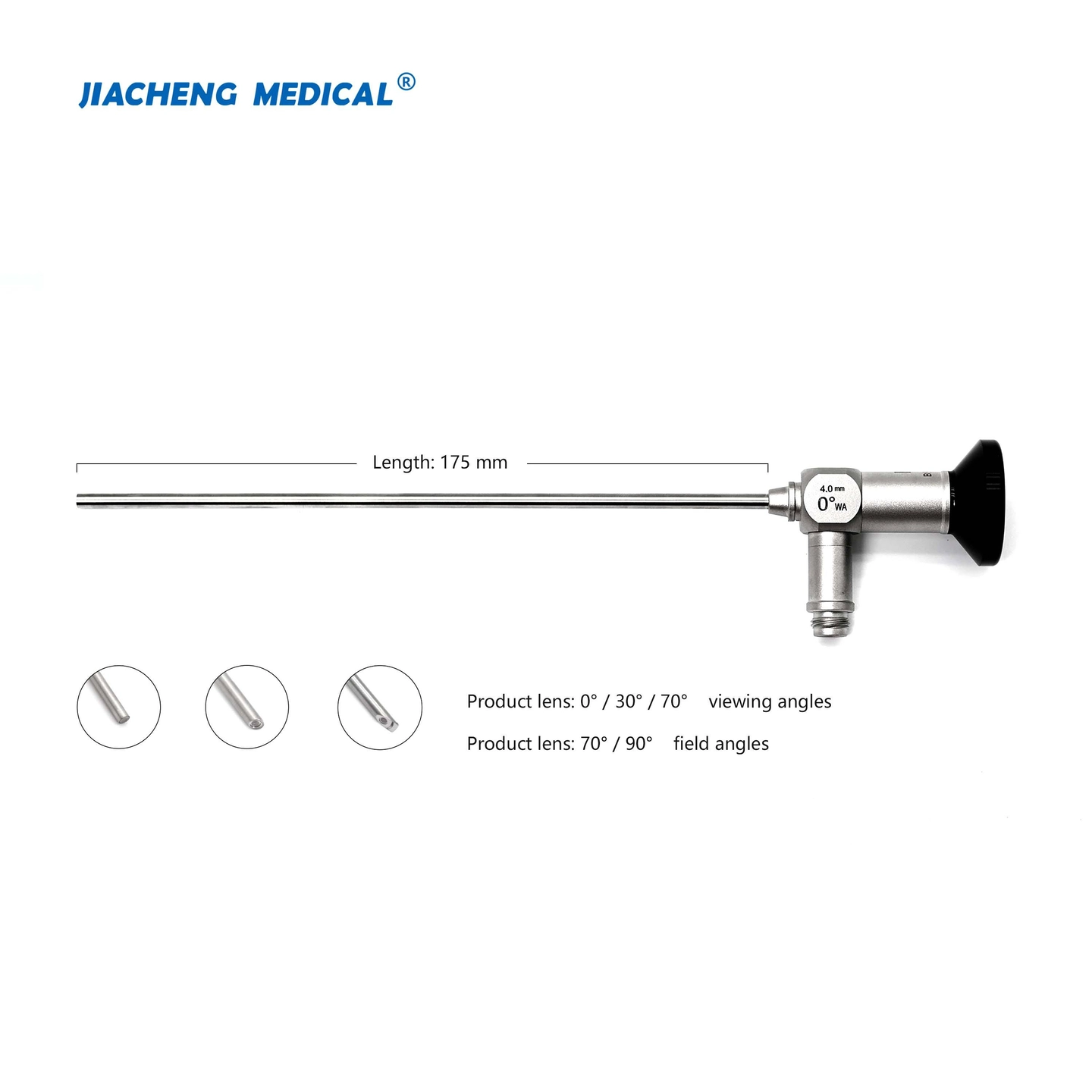


What Is a Sinus Endoscope?
A sinus endoscope - also called a sinuscope, rigid sinuscope, ENT endoscope, or nasal endoscope - is a rigid medical device used in otolaryngology for both examination and minimally invasive surgery. It enables surgeons to visualize the nasal cavity, paranasal sinuses, and surrounding anatomy in narrow, complex surgical fields with exceptional clarity.
Compared to traditional open surgery, sinus endoscopes reduce tissue damage, shorten recovery time, and improve intraoperative precision. They are a core instrument in modern ENT clinical practice and a high-demand product category globally.
Primary clinical applications include:
• Functional Endoscopic Sinus Surgery (ESS/FESS)
• Chronic sinusitis treatment
• Nasal polyp removal
• Nasal cavity examination
• Sinus lesion evaluation and management
Why Sinus Endoscopes Are Clinically Essential
The anatomy of the nasal cavity and paranasal sinuses is inherently narrow and complex. Traditional surgical approaches often fail to deliver adequate visualization. Sinus endoscopes solve this by providing:
• HD surgical imaging in confined anatomical spaces
• Precise tissue localization
• Minimally invasive access that reduces collateral damage
• Stable, consistent visualization throughout the procedure
The growing adoption of FESS worldwide has made sinus endoscopes one of the most consistently demanded ENT instruments - making them a strategically important product line for OEM/ODM partners and distributors.
Viewing Angles: Standard Configurations
Sinus endoscopes are available in three primary viewing angles, each suited to different anatomical regions and surgical tasks.
0° Sinus Endoscope
Provides straight-line, forward-facing imaging - the optical axis is fully aligned with the direction of view. Primarily used for basic nasal examinations, initial anatomical assessment, and routine ENT procedures. Its straightforward optical design makes it a standard inclusion in any comprehensive sinus endoscope lineup.
30° Sinus Endoscope
The most widely used configuration in both FESS and ESS. The angled optic allows surgeons to "see around corners," providing access to the lateral nasal cavity, middle meatus, and ethmoid sinus. Considered the standard workhorse of ENT endoscopy - and therefore the highest-volume SKU for most distributors.
70° Sinus Endoscope
Designed for deep or hidden anatomical structures inaccessible with 0° or 30° scopes, including the frontal and sphenoid sinuses. Essential in complex ENT procedures and a critical complement to the standard 30° scope in full surgical sets.

Product Specifications
Diameter and Working Length
Sinus endoscopes are available in three standard diameters, each paired with working lengths suited to the target patient population and anatomical depth. The table below reflects the most common clinical configurations:
|
Diameter |
Working Length |
Viewing Angles Available |
Typical Application |
|
2.7 mm |
175 mm |
0°, 30°, 70° |
Pediatric patients, narrow nasal passages |
|
4 mm |
175 mm |
0°, 30°, 45°, 70° |
Standard adult examination and surgery |
|
4 mm |
230 mm |
0°, 30°, 70° |
Adult deep sinus access (frontal, sphenoid) |
|
5 mm |
175 mm |
0°, 30°, 70° |
Specialized high-magnification requirements |
Diameter selection considerations:
The 4 mm / 175 mm configuration is the most widely stocked across hospital systems globally and should form the core of any distributor's sinus endoscope inventory. The 2.7 mm scope is essential for pediatric markets and for ENT departments that handle a high volume of pediatric cases. The 230 mm working length variant is particularly relevant for surgeons performing extensive frontal sinus work, where greater reach is required without compromising optical quality.
Working length and field of view:
Longer working lengths do not automatically reduce image brightness or clarity in a well-engineered rod lens system - but they do place greater demands on optical tolerances during manufacturing. When evaluating OEM suppliers, working length consistency and optical performance at full insertion depth are key quality benchmarks to verify during sample evaluation.
Sheath and Outer Tube Specifications
The outer sheath is typically manufactured from medical-grade 304 or 316L stainless steel, with an electropolished or passivated surface finish to maximize corrosion resistance and ease of cleaning. Wall thickness is optimized to maintain structural rigidity under surgical torque while keeping the outer diameter within the specified range.
Some configurations incorporate a protective outer sheath with an integrated irrigation channel, which allows continuous saline flushing during surgery to maintain a clear optical field - a feature increasingly requested in high-volume FESS centers.
Interface Compatibility
All standard sinus endoscopes use an ACMI/Storz-compatible eyepiece interface and a standard light post connector (compatible with major cold light source brands). OEM configurations can be adapted to specific proprietary interfaces upon request. Camera coupler compatibility with major HD and 4K camera head systems (Karl Storz, Stryker, Olympus, and equivalents) should be confirmed at the sample stage for any OEM program targeting hospital system procurement.
Core Components
A standard rigid sinus endoscope consists of five primary components:
1. Eyepiece
Located at the proximal end; connects to HD camera systems or enables direct viewing. Modern designs support high-definition image output compatible with leading visualization platforms.
2. Light Post (Light Connector)
Interfaces with fiber-optic cold light sources to deliver stable, uniform illumination. Consistent lighting is critical for high-quality intraoperative imaging.
3. Insertion Tube
The shaft that enters the nasal cavity. Tube length, diameter, surface finish, and material selection directly impact operational stability, anatomical compatibility, patient comfort, and resistance to corrosion and repeated sterilization.
4. Rod Lens Optical System
The rod lens system is the single most important determinant of sinus endoscope optical performance - and the component where manufacturing quality differences are most clearly visible to end users.
Unlike fiber-optic flexible endoscopes, rigid sinus endoscopes use a relay lens system composed of a series of cylindrical glass rods and air spaces arranged along the optical axis. This design, originally developed by Harold Hopkins in the 1950s, offers substantially higher light transmission, resolution, and color fidelity compared to fiber-optic image bundles.
How the rod lens system works:
Each glass rod acts as both a lens and a spacer, transmitting and re-imaging the optical signal from the distal tip to the eyepiece. The number of relay stages, the glass composition, and the precision of element alignment collectively determine image brightness, resolution, and geometric distortion.

A high-quality rod lens system achieves:
• Resolution: Capable of resolving fine mucosal texture and vascular patterns at the distances used in nasal surgery (typically 5–30 mm working distance)
• Brightness: High light transmission efficiency, minimizing the illumination power required from the external light source
• Color accuracy: Neutral color rendering without chromatic aberration, which is critical for accurate tissue assessment
• Low distortion: Minimal barrel or pincushion distortion, ensuring that anatomical structures appear in correct spatial proportion
Glass material and optical quality tiers:
The optical glass used in the rod lenses is a primary cost and quality driver. Higher-grade borosilicate optical glass (such as SCHOTT N-BK7 or equivalent) offers superior transmission across the visible spectrum, better chemical stability, and tighter refractive index tolerances compared to lower-grade alternatives. For OEM buyers positioning products in the mid-to-premium market, specifying optical glass grade is an important part of the product brief.
Anti-reflection coatings on lens surfaces further reduce internal reflection and improve contrast. Multi-layer AR coatings provide measurably better performance than single-layer treatments, particularly under the high-intensity illumination used in modern HD and 4K camera systems.
Quality indicators for OEM evaluation:
When assessing a manufacturer's rod lens quality, the following parameters should be evaluated during sample review:
|
Parameter |
What to Assess |
|
Image brightness |
Uniform, consistent - no dark center or edge falloff |
|
Resolution at working distance |
Fine tissue detail visible at 10 mm and 20 mm |
|
Color rendering |
No yellow or blue tint; neutral white balance |
|
Distortion |
Straight lines appear straight at the image periphery |
|
Optical fogging after autoclave |
No condensation or haze after 3+ sterilization cycles |
|
Alignment stability |
Image center stable; no rotation or shift after handling |

Rod lens system and product lifespan:
A well-manufactured rod lens system will maintain optical performance across hundreds of sterilization cycles. Degradation typically manifests as progressive image dimming (caused by coating breakdown or cement layer delamination) or localized fogging (caused by seal failure allowing moisture ingress). These failure modes are directly related to manufacturing quality - and are among the most common reasons hospitals return endoscopes for repair or replacement. For OEM partners, offering a clear warranty and repair pathway on optical performance is a meaningful differentiator in competitive procurement environments.
Clinical Applications in Detail
Functional Endoscopic Sinus Surgery (ESS/FESS)
The primary application. Sinus endoscopes enable surgeons to perform sinus opening, lesion treatment, nasal polyp removal, and nasal passage reconstruction through a minimally invasive approach.
Chronic Rhinosinusitis (CRS) Treatment
Transforms diagnosis from experience-based assessment to direct visualization - allowing surgeons to observe mucosal inflammation, identify obstruction or fluid accumulation, and guide surgical planning in real time.
Nasal Polyp Removal
One of the most common surgical indications for sinus endoscopy. Endoscopic access enables precise polyp root localization, resection under direct vision, and preservation of normal mucosa - reducing recurrence risk and intraoperative bleeding.
Nasal Cavity Examination
Used to rapidly evaluate the nasal turbinates, septum, nasal passages, and sinus openings. Applications include inflammation diagnosis, bleeding source localization, tumor evaluation, and infection diagnosis.
Sinus Lesion Evaluation
Enables direct assessment of mucosal thickening, cysts, masses, purulent secretions, and structural abnormalities - supporting decisions on surgical necessity, scope, and lesion severity.
Postoperative Follow-Up
Allows physicians to check healing, clear secretions or crusts, detect recurrence, and evaluate airway recovery without repeat surgery.
Pediatric ENT Examination
Uses 2.7 mm small-diameter scopes for evaluation of chronic nasal obstruction, recurrent rhinitis, nasal foreign bodies, and developmental abnormalities - with a focus on minimal trauma and patient safety.
Foreign Body Removal Assistance
Provides visualized localization of nasal foreign bodies, particularly in pediatric cases, reducing risk compared to blind retrieval methods.
Nasal Tumor Screening and Biopsy Guidance
Supports early tumor detection, extent evaluation, and biopsy guidance under direct visualization.
Regulatory Compliance Requirements
Sinus endoscopes are reusable Class II medical devices that directly contact human tissue. They undergo high-temperature sterilization, chemical disinfection, liquid flushing, mechanical handling, and repeated transport cycles throughout their service life.
Without rigorous design and manufacturing standards, failure modes include cross-infection, image distortion, sterilization failure, seal compromise, and premature product failure - all of which carry serious clinical and liability consequences.
For OEM/ODM partners, demonstrated compliance capability is also a direct indicator of manufacturing maturity, supply reliability, and long-term business credibility.

ISO 8600 Series - Rigid Endoscope Performance Standards
Defines technical performance requirements across the following parameters:
• Optical performance (clarity, field of view, illumination uniformity)
• Interface compatibility with camera systems
• Waterproof sealing and fluid ingress resistance
• Performance stability after repeated sterilization cycles
Key sub-standards relevant to sinus endoscopes:
|
Standard |
Scope |
|
ISO 8600-1 |
General requirements for all medical endoscopes |
|
ISO 8600-2 |
Rigid endoscopes - optical performance and mechanical strength |
|
ISO 8600-4 |
Field of view / direction of view (0°, 30°, 70° parameters) |
|
ISO 8600-5 |
Optical resolution testing |
ISO 13485 - Medical Device Quality Management System
The foundational global quality standard for medical device manufacturing. Key elements include document control, production consistency, process validation, traceability, CAPA, supply chain management, and regulatory compliance.
For buyers: ISO 13485 certification is the baseline indicator that a manufacturer operates with controlled, repeatable processes - not just for the products they currently ship, but for any future OEM/ODM development.
|
Requirement |
ISO 13485 |
ISO 9001 |
|
Industry focus |
Medical devices |
General industry |
|
Primary driver |
Regulation & safety |
Customer satisfaction |
|
Risk management |
Mandatory |
Weak |
|
Traceability |
Required |
Not emphasized |
|
Regulatory compliance |
Strong |
General |
ISO 14971 - Medical Device Risk Management
Defines risk management requirements across the full product lifecycle. For sinus endoscopes, key risks include infection transmission, optical damage, mechanical failure, sterilization failure, and user misuse. Manufacturers must systematically identify, evaluate, control, and continuously monitor these risks.
CE Marking / EU MDR Compliance
For European market access, sinus endoscopes must comply with the EU Medical Device Regulation (MDR). CE marking confirms compliance with EU requirements and permits legal sale across the European Economic Area.
MDR compliance requirements include clinical evaluation, risk management, biocompatibility testing, sterilization validation, complete technical documentation, and post-market surveillance (PMS).
FDA 510(k) Clearance (United States)
In the US market, sinus endoscopes require FDA clearance via the 510(k) pathway. This involves device classification, company registration, Quality System Regulation (QSR) compliance, and demonstration of substantial equivalence to a predicate device.
Core Technical Requirements
Material Compliance
Medical-grade stainless steel and fully biocompatible materials throughout - ensuring corrosion resistance, long-term structural integrity, and sterilization compatibility.
Optical Performance
High-quality rod lens systems deliver HD imaging, stable brightness, low distortion, and uniform illumination - critical for surgeon confidence and clinical outcomes.
Sterilization Compatibility
Must withstand autoclave sterilization, chemical disinfection, and repeated sterilization cycles. Compliance requires validated sterilization protocols, cycle testing, optical stability verification, and seal integrity confirmation.
Sealing and Waterproofing
Reliable sealing is essential to prevent internal water ingress, optical fogging, fiber damage, and internal corrosion - all of which compromise both product lifespan and clinical safety.
Labeling and Traceability
Complete traceability systems include product model, batch information, serial number, manufacturing data, and sterilization instructions - supporting regulatory compliance, recall management, and end-user confidence.
Frequently Asked Questions
Is sinus endoscopy painful?
Most sinus endoscopy procedures are performed under local anesthesia (lidocaine spray or nasal packing with anesthetic). The patient remains awake. General anesthesia is reserved for FESS and more complex surgical procedures.
Can sinus endoscopes be repaired?
Yes, in many cases. Optical issues (fogging, minor contamination, scratches), light source problems, minor seal degradation, and surface-level mechanical damage are generally repairable. Severe tube deformation, major optical system damage, and long-term internal corrosion typically are not. We provide comprehensive repair services including tutorials, spare parts, and tool recommendations.
Can sinus endoscopes be reused?
Yes. Rigid sinus endoscopes are designed as reusable devices and are built to withstand repeated autoclave and chemical sterilization cycles. Strict adherence to sterilization and handling protocols is required to maintain optical performance and patient safety over the product's service life.
What surgeries are sinus endoscopes commonly used for?
Primarily FESS and ESS. Common procedures include chronic sinusitis treatment, nasal polyp removal, sinus drainage, nasal structural repair, and biopsy guidance - all delivered via minimally invasive access with high visualization accuracy.
Do sinus endoscopes require special maintenance?
Yes. After each use, thorough cleaning, disinfection, and sterilization are required. Optical components must be handled carefully to prevent scratches or fogging. Regular inspection is recommended to maintain imaging quality and clinical safety over the product's lifespan.
Looking for a Reliable Sinus Endoscope OEM/ODM Partner?

We provide end-to-end solutions for distributors, procurement teams, and private-label brands:
• OEM / ODM customization - specifications, branding, packaging
• Autoclavable, reusable design for long-term clinical deployment
• HD optical imaging systems with rod lens precision engineering
• Global compliance support - ISO 8600, ISO 13485, ISO 14971, CE MDR, FDA 510(k)
• Endoscope repair services - parts, tutorials, and technical support
Contact us for technical specifications, compliance documentation, and customized OEM/ODM solutions.
Related articles:
[Functional Endoscopic Sinus Surgery (FESS) →]
[How to Source Medical Endoscopes from China →]
[Sinus Endoscope Sterilization & Maintenance Protocol →]
Related products:
[Sinoscope | 0° / 30° / 70° →]
[Sinoscope - Value Series | 0° / 30° / 70° →]
[Professional Arthroscope | 0° / 30° / 70° →]