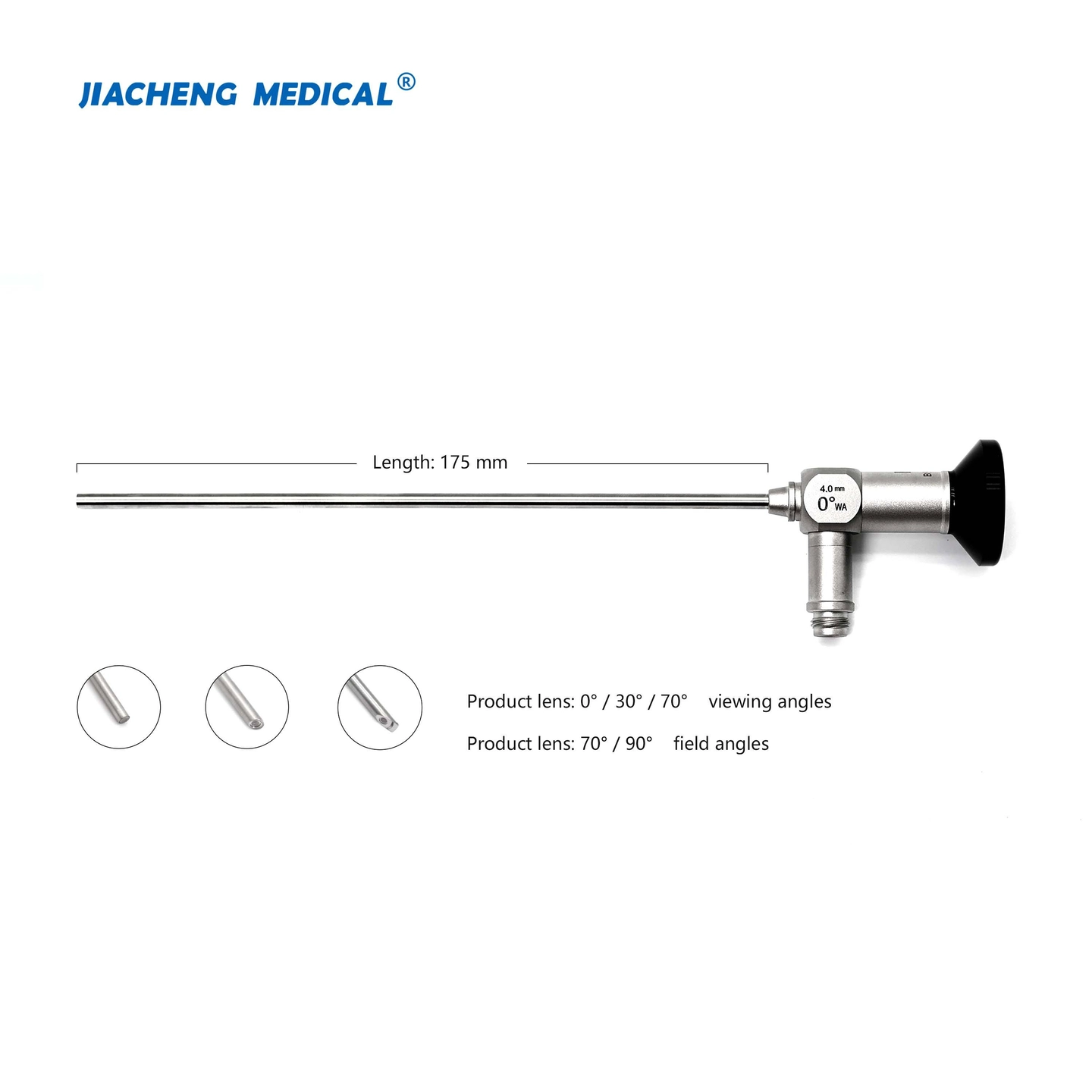


Understanding Endoscope Testing Standards
Endoscope testing standards are structured systems used to verify that medical endoscopes meet defined requirements for safety, optical performance, durability, and clinical reliability.
These standards generally fall into four major categories:
- International standards
- Regional standards
- National regulations
- Industry-specific standards
Together, these frameworks establish the baseline requirements manufacturers must follow before devices can enter regulated medical markets.
International Standards for Medical Endoscopes
International standards are developed by organizations such as the International Organization for Standardization (ISO) and the International Electrotechnical Commission (IEC).
These standards define:
- Optical performance benchmarks
- Safety requirements
- Manufacturing quality systems
- Sterilization validation methods
- Risk management requirements
For rigid endoscopes, the most important standard family is the ISO 8600 series.
ISO 8600 Standards for Rigid Endoscopes
The ISO 8600 series is specifically developed for rigid medical endoscopes and remains one of the most important international standards in endoscope manufacturing.
These standards define performance expectations for:
- Image quality
- Illumination
- Field of view
- Waterproof sealing
- Optical distortion
- Mechanical integrity
ISO 8600-1: Terminology
This section standardizes terminology used in rigid endoscopy, ensuring consistency across:
- Manufacturers
- Regulatory agencies
- Clinical users
It defines terms such as:
- Direction of view
- Working length
- Viewing angle
- Field of vision
ISO 8600-2: Optical Requirements
ISO 8600-2 focuses on optical performance evaluation.
Key testing areas include:
- Resolution
- Brightness uniformity
- Distortion control
- Color accuracy
- Image clarity
For rigid sinus endoscopes used in FESS procedures, optical precision is particularly important because surgeons operate within narrow anatomical structures where even slight image distortion may affect surgical accuracy.
ISO 8600-4: Determination of Field of View
This standard specifies how the visual field of an endoscope should be measured and evaluated.
It ensures:
- Consistent viewing geometry
- Predictable visualization performance
- Standardized clinical usability
ISO 8600-5: Determination of Image Quality
This section evaluates:
- Contrast
- Resolution consistency
- Optical sharpness
- Peripheral image quality
Modern HD and 4K-compatible endoscopes must meet significantly higher image quality expectations than earlier generations of devices.
Optical Performance Testing
Optical testing is one of the most critical aspects of endoscope quality evaluation.
Because endoscopy is fundamentally image-dependent, optical failure directly impacts diagnostic accuracy and surgical safety.
Resolution Testing
Resolution testing determines the smallest detail the endoscope can accurately reproduce.
High-resolution rod lens systems provide:
- Better tissue differentiation
- Improved visualization of mucosal structures
- Enhanced surgical precision
- Modern rigid endoscopes are increasingly expected to support:
- HD imaging systems
- 4K camera platforms
- Digital image enhancement technologies
Distortion Testing
Poor optical alignment can create:
Barrel distortion
Pincushion distortion
Geometric image deformation
Distortion testing ensures:
Accurate anatomical representation
Reliable spatial orientation during surgery
Brightness and Illumination Uniformity
Endoscopes must provide:
- Uniform illumination across the viewing field
- Minimal edge darkening
- Consistent brightness transmission
Testing evaluates:
- Fiber optic light transmission efficiency
- Illumination distribution
- Light loss through the optical system
Color Reproduction Testing
Accurate color rendering is essential for identifying:
- Inflammation
- Bleeding
- Tissue boundaries
- Vascular patterns
Testing compares image output against standardized reference targets to verify color fidelity.
Waterproof and Leak Testing
Medical endoscopes must maintain complete sealing integrity throughout repeated cleaning and sterilization cycles.
Leakage can result in:
- Internal optical fogging
- Corrosion
- Electrical damage
- Cross-contamination risks
Leak Testing Procedures
Leak testing generally includes:
- Positive pressure testing
- Vacuum testing
- Immersion testing
These procedures identify:
- Seal failure
- Micro-cracks
- Connector leakage
Waterproof Validation
Rigid endoscopes are commonly subjected to:
- Repeated immersion cycles
- Sterilization exposure
- Thermal stress testing
Manufacturers must validate that waterproof integrity remains stable throughout the product lifecycle.
Sterilization Resistance Testing
Sterilization compatibility is one of the defining characteristics of reusable medical endoscopes.
Rigid endoscopes are typically exposed to:
- Steam autoclave sterilization
- High-temperature disinfection
- Chemical sterilization agents
Testing verifies whether repeated sterilization causes:
- Optical degradation
- Seal deterioration
- Mechanical deformation
- Lens fogging
Autoclave Cycle Validation
Many hospitals require rigid endoscopes to withstand hundreds of sterilization cycles without performance degradation.
Validation testing evaluates:
Thermal resistance
Pressure resistance
Long-term optical stability
Material Compatibility Testing
Manufacturers must confirm compatibility between sterilization processes and:
- Optical adhesives
- Lens coatings
- Stainless steel components
- Sealing materials
Poor material selection often leads to premature product failure.
Mechanical Durability Testing
Endoscopes experience significant mechanical stress during clinical use, cleaning, transportation, and sterilization.
Mechanical durability testing evaluates the structural reliability of the instrument.
Shaft Strength Testing
Rigid endoscope shafts must resist:
Bending stress
Torsion
Impact damage
Testing verifies:
Mechanical rigidity
Structural alignment stability
Connector Durability Testing
Light post connectors and camera interfaces are repeatedly attached and removed during surgery.
Testing evaluates:
- Wear resistance
- Connection stability
- Interface durability
Drop and Impact Testing
Accidental dropping is a common cause of endoscope damage.
Impact testing helps evaluate:
- Housing durability
- Optical alignment retention
- External structural integrity
Biocompatibility Testing
Endoscopes contact human tissue directly, requiring strict material safety validation.
Biocompatibility testing is generally performed according to ISO 10993 standards.
Cytotoxicity Testing
Ensures device materials do not release substances toxic to cells.
Sensitization and Irritation Testing
Evaluates whether device materials may cause:
- Allergic reactions
- Tissue irritation
- Inflammatory responses
Material Safety Verification
Testing validates the safety of:
- Stainless steel
- Polymer coatings
- Adhesives
- Sealing compounds
Regulatory Compliance and Medical Device Certification
Testing standards are closely tied to regulatory approval pathways.
Without validated testing data, endoscopes cannot legally enter most international markets.
CE Marking and EU MDR
Under the European Union Medical Device Regulation (MDR), manufacturers must demonstrate:
- Clinical safety
- Performance consistency
- Risk management
- Sterilization validation
CE marking requires:
- Technical documentation
- Clinical evaluation
- Post-market surveillance systems
FDA 510(k) Clearance
For the United States market, many endoscopes require FDA 510(k) clearance.
Manufacturers must demonstrate:
- Substantial equivalence
- Safety and effectiveness
- Compliance with applicable standards
ISO 13485 Quality Management System
ISO 13485 is the global quality management standard for medical device manufacturers.
Certification demonstrates:
- Controlled manufacturing processes
- Traceability systems
- Documented quality procedures
- Corrective and preventive action systems
ISO 14971 Risk Management
ISO 14971 governs medical device risk management throughout the entire product lifecycle.
For endoscopes, risk analysis includes:
- Infection transmission
- Optical failure
- Mechanical damage
- Sterilization failure
- User handling risks
Typical Endoscope Quality Control Process
Modern endoscope manufacturing involves multiple stages of inspection and validation.
A typical QC workflow includes:
Raw Material Inspection
↓
Optical Component Testing
↓
Lens Assembly and Alignment
↓
Leak and Waterproof Testing
↓
Optical Resolution Verification
↓
Sterilization Validation
↓
Final QC Inspection
↓
Packaging and Shipment
Each stage is designed to minimize variability and ensure consistent product performance.
What OEM Buyers Should Evaluate
For distributors, hospitals, and OEM procurement teams, supplier testing capability is often more important than price alone.
Manufacturing Validation Capability
Evaluate whether the supplier can provide:
- Optical testing reports
- Sterilization validation data
- Waterproof testing documentation
- Traceability records
Compliance Documentation
Reliable manufacturers should provide:
- CE certificates
- ISO 13485 certification
- FDA documentation (if applicable)
- Material compliance reports
Long-Term Product Stability
OEM buyers should also assess:
- Repair rates
- Product lifespan
- Consistency between production batches
- Technical support capability
Future Trends in Endoscope Testing
As endoscopy technology advances, testing requirements are becoming increasingly sophisticated.
Emerging trends include:
- 4K and ultra-HD optical validation
- Fluorescence imaging calibration
- AI-assisted image quality analysis
- Robotic endoscope compatibility testing
- Digital image processing verification
Future standards are expected to place greater emphasis on:
- Image reproducibility
- Data integration
- Software validation
- Cybersecurity for digital systems
Frequently Asked Questions (FAQ)
What is the most important standard for rigid endoscopes?
The ISO 8600 series is one of the most important standards specifically developed for rigid endoscope optical performance and testing.
Why is sterilization validation important?
Endoscopes are reusable medical devices exposed to repeated sterilization cycles. Validation ensures long-term safety and performance stability.
What is the difference between CE and FDA approval?
CE marking focuses on compliance with EU MDR requirements, while FDA clearance demonstrates substantial equivalence and regulatory compliance for the U.S. market.
Why is optical testing critical for endoscopes?
Endoscopy relies entirely on visual accuracy. Poor image quality can reduce diagnostic precision and increase surgical risk.
Conclusion
Modern medical endoscopes are highly sophisticated optical instruments that must meet strict requirements for image quality, sterilization resistance, mechanical durability, and patient safety.
From ISO 8600 optical standards to FDA and CE regulatory requirements, testing standards play a critical role in ensuring endoscopes perform reliably in demanding clinical environments.
For manufacturers, distributors, and OEM buyers, understanding these testing standards is essential not only for regulatory compliance, but also for maintaining product quality, surgical precision, and long-term market competitiveness.