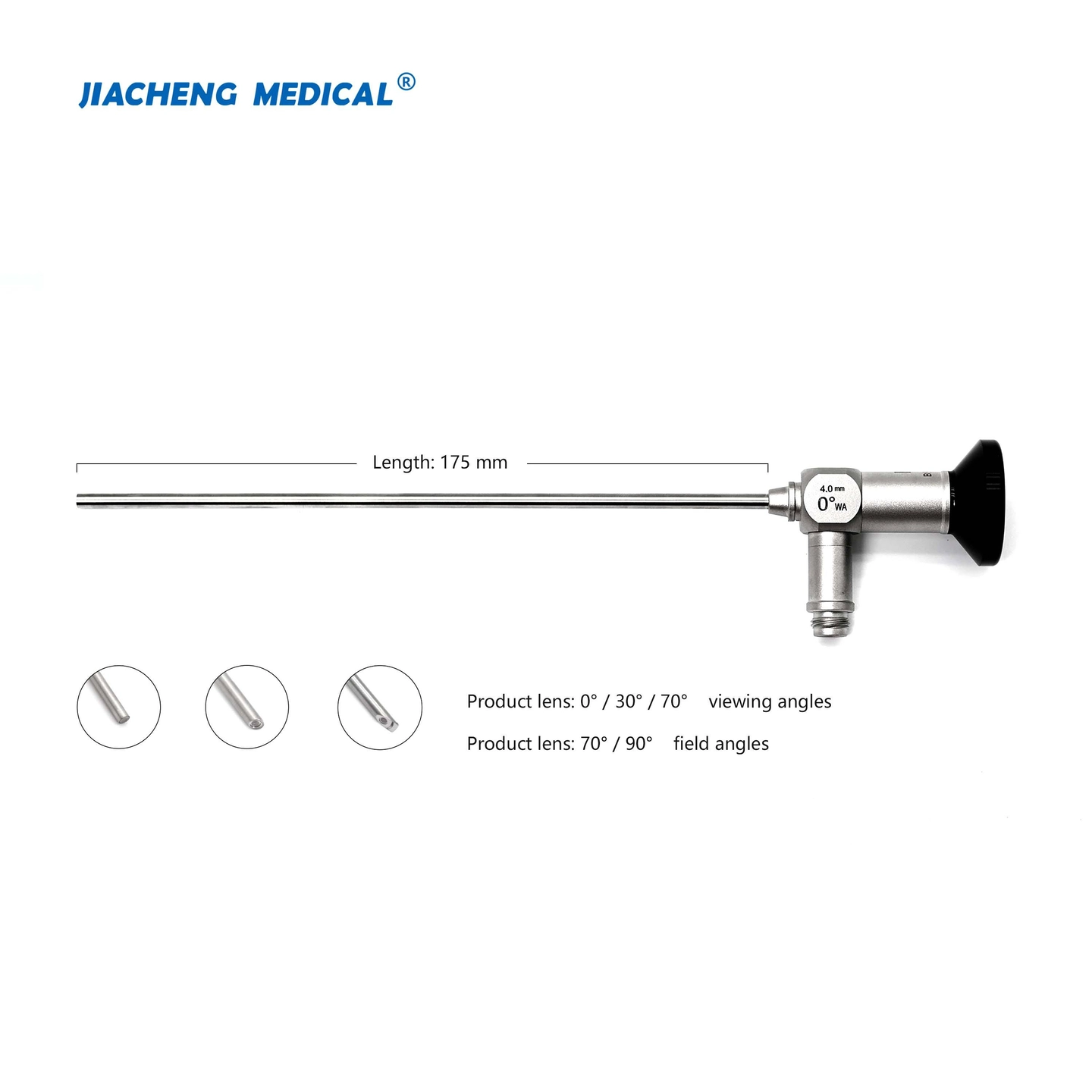


Endoscopy is one of the most consequential innovations in modern medicine - enabling physicians to visualize internal anatomy without open surgery. Today, rigid endoscopes are standard instruments in ENT surgery, urology, gynecology, and neurosurgery, with advanced systems like the rigid sinus endoscope forming the technical backbone of Functional Endoscopic Sinus Surgery (FESS).
But this technology did not emerge overnight. The development of endoscopy spans nearly two centuries, progressing from candlelit observation tubes to high-definition rod lens optical systems capable of resolving fine mucosal detail in real time. Understanding this evolution provides important context for clinicians, engineers, and medical device manufacturers working in this field today.
1. The Earliest Concepts: Bozzini and the Lichtleiter (1795)
The history of endoscopy begins in the late 18th century, when German physician Philipp Bozzini introduced what is widely considered the first instrument designed for internal visualization. His device, the Lichtleiter (meaning "light conductor"), used candlelight reflected through mirrors to illuminate natural body cavities - including the urethra, rectum, and nasal passages.
The Lichtleiter was never used clinically on a wide scale, and Bozzini faced censure from the Medical Faculty of Vienna for conducting experiments on humans. Nevertheless, his concept - directing artificial light into the body to enable visual examination - established the foundational principle on which all subsequent endoscopic development would be built.

Bozzini Lichtleiter 1795 - earliest known endoscopic instrument for internal visualization
2. The First Practical Endoscopic Systems (1835–1853)
Progress accelerated in the mid-19th century. In 1835, French physician Antoine Jean Desormeaux developed a more practical instrument using a kerosene lamp as a light source, with a system of mirrors and lenses to direct illumination. By 1853, he had successfully used this device to examine the urinary bladder - an achievement that earned him recognition as one of the founding figures of clinical endoscopy.
Despite this progress, early endoscopes had significant limitations that severely restricted their clinical utility:
- Light sources were weak, unstable, and generated heat that risked tissue burns
- The field of view was narrow and distorted
- Rigid metal insertion tubes caused significant patient discomfort
- Sterilization was inconsistent, raising infection risks
- Diagnostic accuracy was limited by poor image quality
As a result, early endoscopy was largely confined to examination of the bladder and rectum, and even in those applications, its clinical value was modest compared to what would follow.
3. The Transition Era: Electric Light and Improved Optics (1870s–1950s)
The invention of the electric incandescent bulb in the 1870s transformed endoscope design. For the first time, a stable, controllable light source could be miniaturized and introduced into the body - eliminating the dangerous heat and instability of open-flame systems.
Over the following decades, endoscope design gradually improved:
- Miniaturized electric lamps were integrated into the distal end of instruments
- Lens systems were refined to improve image clarity and field of view
- Instrument diameters were progressively reduced
- New anatomical applications were explored, including gastroscopy and bronchoscopy
However, a fundamental optical limitation remained. Conventional lens-based relay systems - which transmitted images through a series of small lenses separated by air spaces - suffered from substantial light loss, limited resolution, and geometric distortion. These constraints capped the clinical performance of rigid endoscopes and drove the search for a fundamentally different optical architecture.
4. The Hopkins Rod Lens Revolution (1960s)
The most important single advance in rigid endoscope history came in the 1960s, when British physicist Harold Hopkins developed the rod lens optical system - a design that transformed endoscope performance and remains the basis of modern rigid endoscopes to this day.

Comparison diagram of Hopkins rod lens system versus conventional lens relay in rigid endoscopes
Hopkins' insight was to invert the conventional design. Rather than using small lenses separated by long air spaces, the rod lens system uses long cylindrical glass rods separated by short air spaces. This seemingly simple inversion produced dramatic optical improvements:
- Light transmission increased by a factor of approximately 80 compared to conventional lens systems
- Resolution improved substantially, enabling visualization of fine anatomical detail
- Color fidelity was markedly better, with neutral, accurate color rendering
- Distortion was significantly reduced, producing geometrically accurate images
Hopkins initially struggled to commercialize his invention, but after partnering with Karl Storz in the late 1960s, the rod lens endoscope entered clinical use and rapidly became the dominant technology in rigid endoscopy.
For a detailed technical explanation of how the rod lens system works - including optical glass grades, anti-reflection coatings, and quality benchmarks relevant to OEM manufacturing - see our [Rigid Sinus Endoscope technical guide →].
5. Fiber Optics and Flexible Endoscopy (1950s–1980s)
In parallel with the development of rigid rod lens endoscopes, a separate technological stream emerged: fiber-optic endoscopy. In the 1950s, researchers developed the ability to transmit light and images through flexible bundles of glass fibers, enabling the construction of endoscopes that could navigate curved anatomical pathways inaccessible to rigid instruments.

Flexible fiber-optic endoscopes transformed gastroenterology, pulmonology, and colonoscopy - applications where anatomical geometry makes rigid instruments impractical. However, for ENT applications - particularly nasal and sinus surgery - rigid endoscopes retained clear advantages:
- Significantly higher image resolution (fiber bundles produce a pixelated image; rod lens systems do not)
- Superior brightness and color accuracy
- Greater mechanical stability during surgical manipulation
- Simpler sterilization and maintenance
This is why rigid sinus endoscopes, based on Hopkins rod lens technology, remain the standard instrument for FESS and ENT endoscopy today - despite the widespread adoption of flexible systems in other specialties.
6. Modern ENT Endoscopy and the Rise of FESS (1980s–Present)
The clinical application of rigid endoscopes in ENT surgery accelerated dramatically in the 1980s, driven by the work of Austrian surgeon Heinz Stammberger and German surgeon Wolfgang Messerklinger, who developed and systematized Functional Endoscopic Sinus Surgery (FESS).
FESS represented a paradigm shift in the treatment of chronic sinusitis, nasal polyps, and related conditions. Rather than radical surgical resection through external incisions, FESS used rigid endoscopes to access the sinus drainage pathways through the nose - preserving normal anatomy, reducing tissue damage, and enabling faster recovery.
The technique depended entirely on the optical quality of the rigid endoscope. High-definition visualization, achieved through advanced rod lens systems and compatible HD camera platforms, allowed surgeons to operate with precision in the narrow confines of the nasal cavity and paranasal sinuses.
Today, rigid sinus endoscopes are available in three standard viewing angle configurations - 0°, 30°, and 70° - each suited to different anatomical regions and surgical tasks. Standard diameters of 2.7 mm, 4 mm, and 5 mm accommodate pediatric and adult applications respectively. For a full breakdown of specifications and clinical use cases, see our [Sinus Endoscope product and specification guide →].
7. Regulatory Evolution: From Clinical Tool to Regulated Medical Device
As endoscopes became standard surgical instruments, regulatory frameworks developed to govern their manufacture, performance, and safety. This evolution reflects both the clinical stakes involved and the complexity of manufacturing reusable devices that must maintain consistent performance across hundreds of sterilization cycles.
Key international standards governing rigid endoscope manufacture today include:
ISO 8600 Series - Defines optical performance requirements for rigid endoscopes, including image clarity, field of view, illumination uniformity, and waterproof sealing. Sub-standards ISO 8600-2, 8600-4, and 8600-5 are directly applicable to sinus endoscopes.
ISO 13485 - The global quality management standard for medical device manufacturers. Certification demonstrates controlled, traceable manufacturing processes - a baseline requirement for OEM/ODM suppliers entering regulated markets.
ISO 14971 - Risk management across the full product lifecycle, covering infection transmission, optical failure, sterilization failure, and mechanical damage.
EU MDR / CE Marking - Required for legal sale in the European Economic Area. MDR compliance involves clinical evaluation, biocompatibility testing, sterilization validation, and ongoing post-market surveillance.
FDA 510(k) - Required for US market access, demonstrating substantial equivalence to a cleared predicate device.
For OEM manufacturers and distributors, compliance with these standards is not optional - it is the baseline requirement for market entry and a direct signal of manufacturing maturity to procurement buyers. Our [Sinus Endoscope compliance guide →] covers each standard in detail.
8. What This History Means for Medical Device Manufacturers Today
The two-century evolution of endoscopy has several practical implications for manufacturers operating in this space:
Optical quality is the primary differentiator. The Hopkins rod lens system set a performance benchmark in the 1960s that still defines what surgeons expect from a rigid endoscope. Manufacturers who compromise on glass grade, coating quality, or alignment precision are not competing on a lower tier - they are producing products that will fail in clinical use and generate returns, repairs, and reputational damage.
Sterilization compatibility is non-negotiable. Modern endoscopes must withstand repeated autoclave cycles without optical degradation. This requires validated manufacturing processes, high-grade sealing materials, and systematic cycle testing - not just nominal compliance claims.
Regulatory requirements will continue to increase. The transition from EU MDD to MDR, tightening FDA oversight, and the expansion of UDI traceability requirements all signal a regulatory environment that rewards manufacturers with genuine quality systems over those relying on legacy approvals.
The market rewards specialization. As endoscopic techniques continue to evolve - with 4K imaging, fluorescence-guided surgery, and robotic-assisted ENT procedures emerging - component-level quality and OEM customization capability will become increasingly important differentiators for suppliers.
Conclusion
From Bozzini's candlelit Lichtleiter in 1795 to the HD rod lens sinus endoscopes used in FESS today, the history of endoscopy is a story of compounding optical, engineering, and regulatory progress. Each generation of innovation built on the limitations of the last - and the result is a technology that has fundamentally changed what is surgically possible.
For medical device manufacturers and OEM/ODM partners, this history is not merely background context. It explains why optical quality benchmarks, sterilization validation, and regulatory compliance are as demanding as they are - and why meeting those demands is the foundation of a credible, durable position in the global endoscope market.
Interested in our rigid sinus endoscope product range, OEM/ODM customization options, or compliance documentation? [Contact us →] for technical specifications and sample requests.