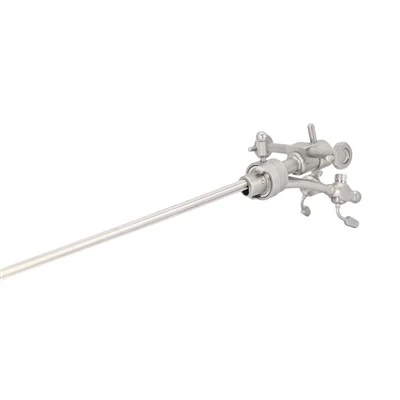



As a professional manufacturer and supplier of rigid endoscope components, we understand that safety and stable performance are non-negotiable indicators for endoscopic optical accessories. Serving as the core light transmission unit of rigid endoscope systems, endoscope light guide fibers feature material properties, optical stability and mechanical strength that directly affect intraoperative visualization and patient safety. This article introduces the core safety specifications for endoscope light guide fibers and our complete quality control system tailored for medical scenarios.
What Are Endoscope Light Guide Fibers?
Endoscope light guide fibers are fiber bundle assemblies that deliver illumination from an external cold light source to the distal tip of rigid endoscopes. Sufficient and uniform lighting is a prerequisite for clinicians to clearly observe tissue structures during minimally invasive examinations and surgical procedures.
Our endoscope light guide fibers are specially designed with high light transmittance to provide stable and bright illumination. The products are used together with other rigid endoscope spare parts, including rod lenses, lens protection covers, eyecups and sapphire objective lenses, to form a complete optical imaging system for rigid endoscopes.
Core Safety and Performance Specifications
1. Biocompatibility
Light guide fibers come into indirect contact with human tissues during clinical operations. Raw materials must meet the biocompatibility requirements for medical devices, featuring non-toxicity, non-sensitization and non-genotoxicity. All products undergo a full set of tests in accordance with ISO 10993 Biological Evaluation of Medical Devices, covering cytotoxicity, skin irritation, sensitization, genotoxicity and other items. It ensures that no adverse biological reactions in the human body will be triggered by materials during endoscopic diagnosis and treatment.
2. Optical Performance
Stable and reliable optical output is the basic indicator of light guide fibers. The fiber shall realize efficient and uniform light transmission with stable attenuation and no obvious optical distortion. Key optical parameters such as numerical aperture, optical attenuation and spectral bandwidth are strictly controlled during production to guarantee light transmission efficiency, avoid local darkening and uneven light spots during surgery, and provide continuous and reliable lighting for endoscopic imaging.
3. Mechanical Strength and Long-term Durability
Clinical application, repeated disassembly and assembly, as well as disinfection procedures will exert continuous stress on light guide fibers. Products shall have good tensile, bending and fatigue resistance. Fiber breakage will not easily occur after repeated bending and pulling, and optical performance will not decay rapidly due to mechanical wear. Mechanical fatigue tests are performed to verify product reliability, reduce the risk of fiber fracture in clinical use and extend the service life of accessories.
4. Chemical Resistance to Disinfection
During endoscopic cleaning and disinfection, light guide fibers are exposed to various medical disinfectants and cleaning agents. Materials must have excellent chemical corrosion resistance. After contact with disinfectants, the fiber body, light transmittance and mechanical strength will not deteriorate. The products have been tested by immersion in a variety of common endoscopic disinfectants, compatible with conventional endoscopic cleaning and disinfection workflows, and maintain stable performance after repeated disinfection.
5. Flame Retardancy
Although the probability of fire in endoscopic surgery is relatively low, the flame-retardant property of component materials still needs to be considered. Low-flammability raw materials are selected to reduce fire risks in case of equipment circuit abnormalities and other emergencies, adding safety protection for medical staff and patients.
Value of Complying with Safety Specifications
First of all, ensure patient safety. The adoption of light guide fibers complying with specifications can minimize clinical risks caused by material-related adverse reactions and component failures, enabling doctors to perform endoscopic operations with greater confidence.
Secondly, guarantee stable operation of the whole endoscope. Qualified light guide fibers can continuously and stably output illumination, maintain a good field of vision, and ensure the smooth progress of diagnosis and minimally invasive surgery.
Finally, compliance with safety standards is also the legal and industrial responsibility of medical device suppliers. Medical endoscopic accessories are subject to strict supervision in countries worldwide. Failure to meet quality and safety requirements may lead to product recalls, penalties and other risks.
Our Commitment to Quality and Safety
As a supplier of rigid endoscope accessories, we have established a full-process quality control system from raw material selection to finished product delivery. The production workshop is equipped with precision processing and testing equipment, and production processes are continuously optimized to ensure consistent product performance.
We also keep investing in R&D to iterate light guide fiber materials and manufacturing technologies to meet the evolving clinical and sterilization requirements of the medical industry.
Procurement Inquiry
If you need to purchase high-quality endoscope light guide fibers, or want to know detailed product parameters, samples and quotations, please contact us for discussion. We can serve various customers such as hospitals, medical device distributors and scientific research institutions, and provide supporting endoscopic optical accessory solutions on demand.