

As core medical devices for minimally invasive diagnosis and clinical examination, rigid endoscopes are widely adopted in general surgery, orthopedics, otolaryngology, urology and other clinical departments. The working condition of core optical, protective and auxiliary components directly determines the imaging accuracy, clinical safety and operational stability of rigid endoscopes. Component wear and aging are inevitable conventional equipment losses during long-term clinical application. However, continuous use of worn and aged components without timely replacement will trigger multiple risks, including abnormal imaging, nosocomial infection, potential clinical safety hazards and increased equipment maintenance costs.
Imaging Defects and Misdiagnosis Risks Caused by Worn Optical Components
Optical assemblies serve as the core functional units of rigid endoscopes. The intactness of key components such as light guide fibers and sapphire objective lenses is the foundation of high-definition imaging and accurate clinical diagnosis. Component aging and wear directly damage the optical imaging system and result in clinical diagnosis deviations.
Endoscope light guide fibers are core light transmission components responsible for delivering light to the surgical field during clinical procedures. Long-term repeated use, cleaning, disinfection and mechanical friction may cause fiber breakage, light-transmitting layer abrasion and reduced light transmission efficiency. Damaged light guide fibers lead to decreased luminous flux, uneven light distribution and partial light shielding, resulting in dim surgical field images, inconsistent illumination and reduced identifiability of fine tissue structures. In precise minimally invasive procedures, blurred and dim images prevent medical staff from accurately identifying tiny lesions, blood vessels and tissue abnormalities, which greatly increases the risk of missed diagnosis and misdiagnosis and compromises the accuracy and effectiveness of clinical diagnosis and treatment.
The sapphire objective lens is a critical imaging acquisition component of rigid endoscopes, featuring high light transmittance, excellent wear resistance and high imaging precision. It captures optical images of internal surgical fields and transmits them to the imaging system. During prolonged service, the objective lens is subject to disinfectant corrosion, collision friction and repeated wiping, which may cause surface scratches, coating peeling, lens abrasion and local damage. Worn objective lenses result in image distortion, blurring, light spots, chromatic aberration and artifact interference, leading to distorted clinical images. Distorted visual information hinders medical staff from accurately judging lesion location, lesion severity and tissue status, significantly elevating the risk of clinical diagnosis errors and endangering patient safety.
Nosocomial Infection and Patient Safety Risks Induced by Aging Auxiliary Components
Auxiliary protective components such as endoscope eyecups are essential structures that ensure clinical hygiene and isolate external contaminants. Their sealing performance and intactness are directly correlated with nosocomial infection control. Aging and wear of these components will severely compromise the hospital infection prevention and control system.
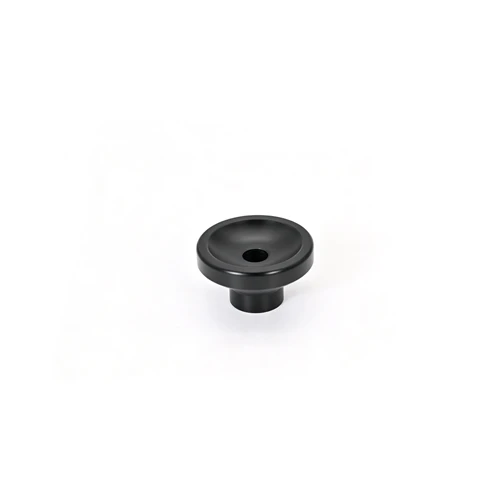
The eyecup is designed to fit the eyepiece of rigid endoscopes, isolating external dust, contaminants, ocular secretions and skin contaminants to ensure sterile observation conditions and standardize clinical operation scenarios. Aging, decreased elasticity, deformation, damage and poor fitting of eyecups will invalidate the sealing protection structure, allowing bacteria, dust and residual disinfectant contaminants to invade the internal pipelines and optical structures of endoscopes through gaps.
Contaminants accumulated inside the equipment cannot be completely eliminated by routine cleaning and disinfection procedures. They may come into direct contact with patient tissues during repeated clinical use, significantly increasing the incidence of intraoperative cross-infection and postoperative wound infection. In minimally invasive surgeries with stringent sterile requirements, hygienic hazards caused by component wear violate standardized nosocomial infection control protocols and pose severe threats to patient safety.
Equipment Operation Risks and Economic Losses Caused by Component Deterioration
The continuous clinical use of worn and aged rigid endoscope components not only triggers clinical safety risks, but also leads to frequent equipment failures, increased maintenance costs and suspended clinical services, disrupting the routine diagnosis and treatment order of medical institutions.
First, deteriorated components accelerate overall equipment failure and cause clinical service suspension. Worn components operate under unstable conditions and are prone to sudden failure, fracture and functional breakdown during clinical procedures, forcing endoscopes to shut down for maintenance. This reduces clinical efficiency, results in idle medical resources and causes patient backlogs.
Second, prolonged use of worn components increases long-term operational and maintenance costs. Operating defective components aggravates the load and wear of other supporting parts, causing cascading component damage. Compared with predictive maintenance with regular component replacement, em ergency repairs, overall component replacement and in-depth equipment troubleshooting incur substantially higher costs. Meanwhile, equipment downtime leads to reduced patient admission volume and delayed surgeries, generating implicit economic losses and failing to meet the refined cost control requirements of medical device management.
Conclusion
Continuous application of worn and aged rigid endoscope components leads to a series of risks including image distortion, clinical misdiagnosis, nosocomial infection, frequent equipment failures and rising operational costs. Such practices fail to comply with clinical medical safety specifications and hinder refined operational management of medical institutions. Medical institutions should adopt a proactive predictive maintenance strategy. Through standardized management measures including regular equipment inspection, timely hazard elimination and high-quality component replacement, potential operational risks can be fully mitigated. This ensures stable, safe and precise operation of rigid endoscopes, improves overall clinical diagnosis and treatment quality, and safeguards patient medical safety.