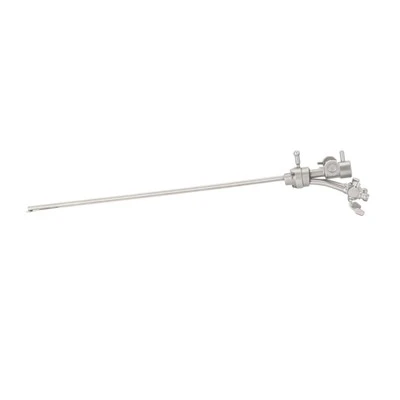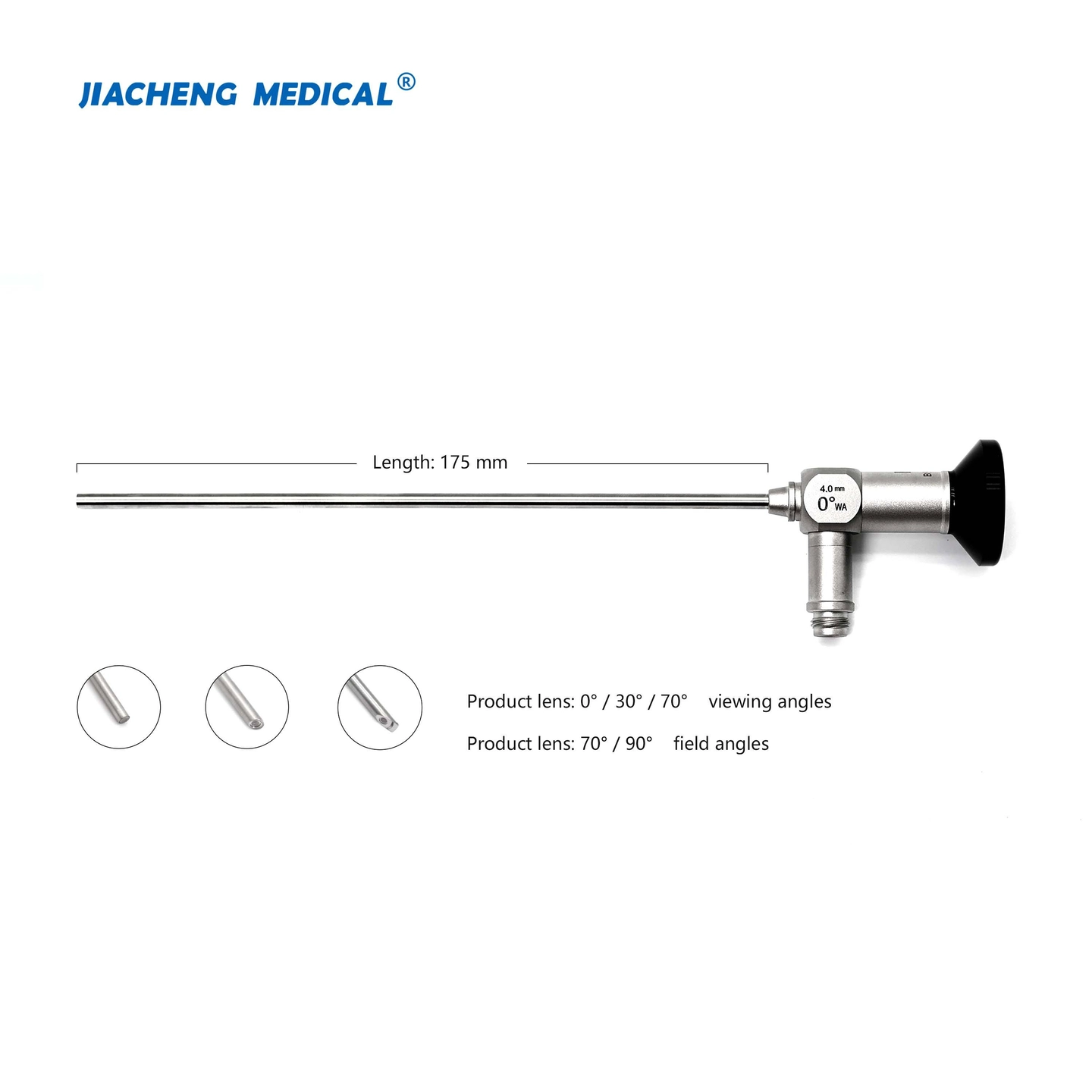




A ureteroscope consists of a slender stainless steel shaft that houses the optical system (objective lens, rod lenses, image bundle, etc.) and the instrument channel. During clinical diagnosis and treatment, the physician advances surgical instruments through the instrument channel to treat conditions such as urinary tract stones. Given the shaft's small diameter and thin wall, combined with demanding working conditions, two types of problems commonly arise with extended use:
1.Bending or Deformation of the Shaft
Forces applied during procedures, improper storage, or accidental impact can bend or dent the shaft. Deformation causes deviation of the optical axis and degraded image quality; in severe cases, it compresses the instrument channel, impeding instrument insertion and surgical manipulation.
2.Wear or Damage to the Instrument Channel
Forced insertion of oversized instruments, or contact between the channel tip and hard stones, can cause wear, splitting, or deformation of the instrument channel. In severe cases, the entire shaft must be replaced.
Both issues require professional reshaping and disassembly work - precisely the tasks for which the ureteroscope straightening forceps is designed, providing reliable support for these operations.
Product Applications
This product offers two core functions:
1.Shaft Reshaping
Used to straighten and correct bent or deformed ureteroscope shafts. The jaws apply a uniform, controlled corrective force to the deformed area, gradually restoring the shaft to its original straightness and geometry, thereby safeguarding the image quality of the optical system and the proper function of the instrument channel.
Key points for reshaping:
- Locate the deformed area and confirm the correction range.
- Apply the corrective force progressively and evenly; avoid excessive force that may crack the shaft wall or cause secondary damage.
- Monitor the change in deformation throughout the process to prevent overcorrection.
- Upon completion, re-verify the optical image quality and the patency of the instrument channel to confirm the shaft has returned to its normal condition.
2.Shaft Removal
Used during complete shaft replacement. To replace the shaft, grip the wall of the old shaft with the jaws and withdraw it smoothly from the scope body under a stable, evenly distributed grip, providing the basis for installing the new shaft. Even force distribution is essential to avoid secondary damage to either the shaft or the scope body.
Key points for removal:
- Maintain even gripping force during clamping to prevent slipping or new damage to the shaft wall.
- After withdrawing the old shaft, clean the interior of the scope body and inspect the condition of the related components.
- After installing the new shaft, perform the necessary checks to confirm proper seating and normal function.
Product Models
Angled-Tip Straightening Forceps

Flat-Tip Straightening Forceps

Maintenance and Care
- Clean the tool surface promptly after each use to remove residual contaminants.
- Apply rust prevention treatment to keep the tool in good condition.
- Periodically check jaw alignment to ensure consistent performance.
- Store the tool properly to avoid impact damage.
Related tools
[ Introduction to Rigid Endoscope Repair Tools: Stainless Steel Needle-Nose Pliers →]
[ Introduction to Rigid Endoscope Repair Tools: Electric Grinder →]
[ Introduction to Rigid Endoscope Repair Tools: Image Adjustment Tools →]